Jul 12, 2024
What I Learned at Figma Config 2024
I went into Config excited about new features.
I left thinking a lot more about where design is headed.
Yes, the AI announcements were impressive. Yes, prototyping keeps getting more powerful. But what stuck with me wasn’t a single feature drop. It was the shift in expectations around what designers actually do.
1. Design Is Expanding, Not Shrinking
With all the AI announcements, there’s a lot of noise about designers being replaced.
Config made something very clear: tools are getting more powerful, but design is getting broader.
AI can:
Generate layout variations
Speed up asset production
Assist with copy
Automate repetitive work
But it can’t:
Define the right problem
Align stakeholders
Navigate regulatory constraints
Make judgment calls around safety and ambiguity
If anything, the role of the designer is becoming more strategic. Less pixel pushing. More decision-making.
For someone working in regulated healthcare, that feels especially true.
2. Systems Thinking Is the Real Superpower
The best talks weren’t about individual screens. They were about systems.
Design systems. Cross-platform consistency. Shared language between design and engineering. Scalable component architecture.
As products grow more complex, systems thinking becomes the differentiator.
In medical tech, where multiple surfaces interact (hardware, mobile apps, clinician dashboards), consistency isn’t just aesthetic. It reduces cognitive load and prevents errors.
Config reinforced something I’ve always believed: great design is less about one beautiful screen and more about how everything connects.
3. Prototyping Is Becoming More Expressive
The prototyping improvements were exciting. Motion, variables, interactions. It’s becoming easier to simulate real product behavior inside Figma. That means fewer assumptions and clearer conversations with engineering. In healthcare products, this matters.
When you’re designing:
Alert states
Edge cases
Multi-step setup flows
Dynamic data visualizations
Static mockups aren’t enough. The closer a prototype behaves to reality, the better we can test clarity, usability, and risk.
4. Collaboration Is the Product
One theme that came up repeatedly: design does not happen alone.
Figma continues to blur the lines between:
Designer
Engineer
Product manager
Researcher
And honestly, that reflects real life.
In my own experience, the most impactful work happens when:
Engineers are involved early
Product understands the “why”
Research informs requirements
Documentation connects everything
Config felt like a celebration of shared ownership.
5. AI Is a Tool, Not a Strategy
AI was everywhere. But what stood out was how thoughtfully it was framed.
The most compelling examples weren’t “look what AI can do.” They were “look how AI can accelerate iteration.”
AI should:
Remove friction
Reduce repetitive work
Speed up exploration
But it should not:
Replace human judgment
Override safety thinking
Bypass research
Especially in regulated healthcare, automation must be intentional.
The question isn’t “Can we generate this faster?”
It’s “Should this be generated at all?”
6. Craft Still Matters
Despite all the automation, craft was everywhere.
Typography.
Spacing.
Hierarchy.
Motion.
Tone.
The best product demos still felt intentional.
Design maturity is not about adding more features. It’s about refining the experience so it feels cohesive and calm.
That resonated deeply with me.
In healthcare, calm is not aesthetic. It’s functional.
7. Community Fuels Growth
Beyond the sessions, the biggest takeaway was energy.
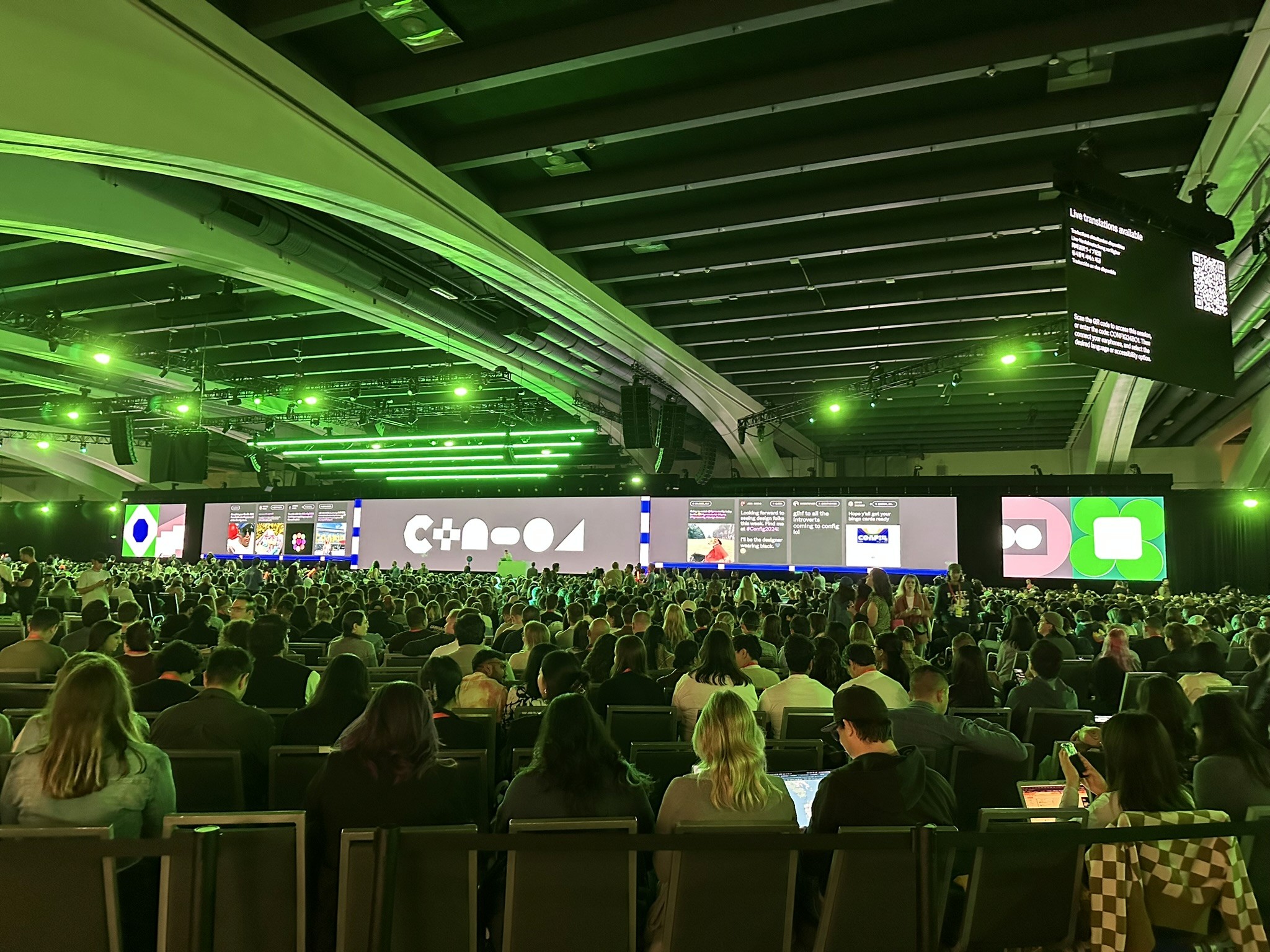
Being around thousands of designers, who were all thinking about process, craft, collaboration, and impact, reminded me why I chose this field.
Design can feel isolating inside a regulated enterprise environment. Config reminded me that the discipline is evolving rapidly, and we’re part of something much bigger.
Final Reflection
Figma Config 2024 didn’t just show new features.
It highlighted a shift:
Design is becoming more strategic.
More systemic.
More collaborative.
More accountable.
And as tools get faster, our thinking has to get sharper. That’s the real opportunity.