Medtronic is the world’s largest medical device company, and with scale comes the need for operational efficiency. If order tracking, device setup, and training are fragmented across disconnected or outdated systems, delays and uncertainty impact both patients and clinicians, slowing access to therapy when time matters most.
Role
Senior UX/UI Designer
Team
Company
Medtronic
CRM
Telehealth
Workflow Streamlining
Enterprise Platform
Service Design
My Role
I redesigned the digital healthcare journey for patients.
I led the design of the patient-facing mobile experience across ordering, device setup, and training workflows. In parallel, I partnered closely with a fellow designer leading the care team desktop platform to ensure alignment across roles and lifecycle touchpoints. I collaborated with Marketing, Sales, Customer Support, and Engineering to understand current system challenges and translate operational requirements into scalable digital workflows.
The Core Problem
Challenges with product activation stemmed from inefficient, disconnected systems.
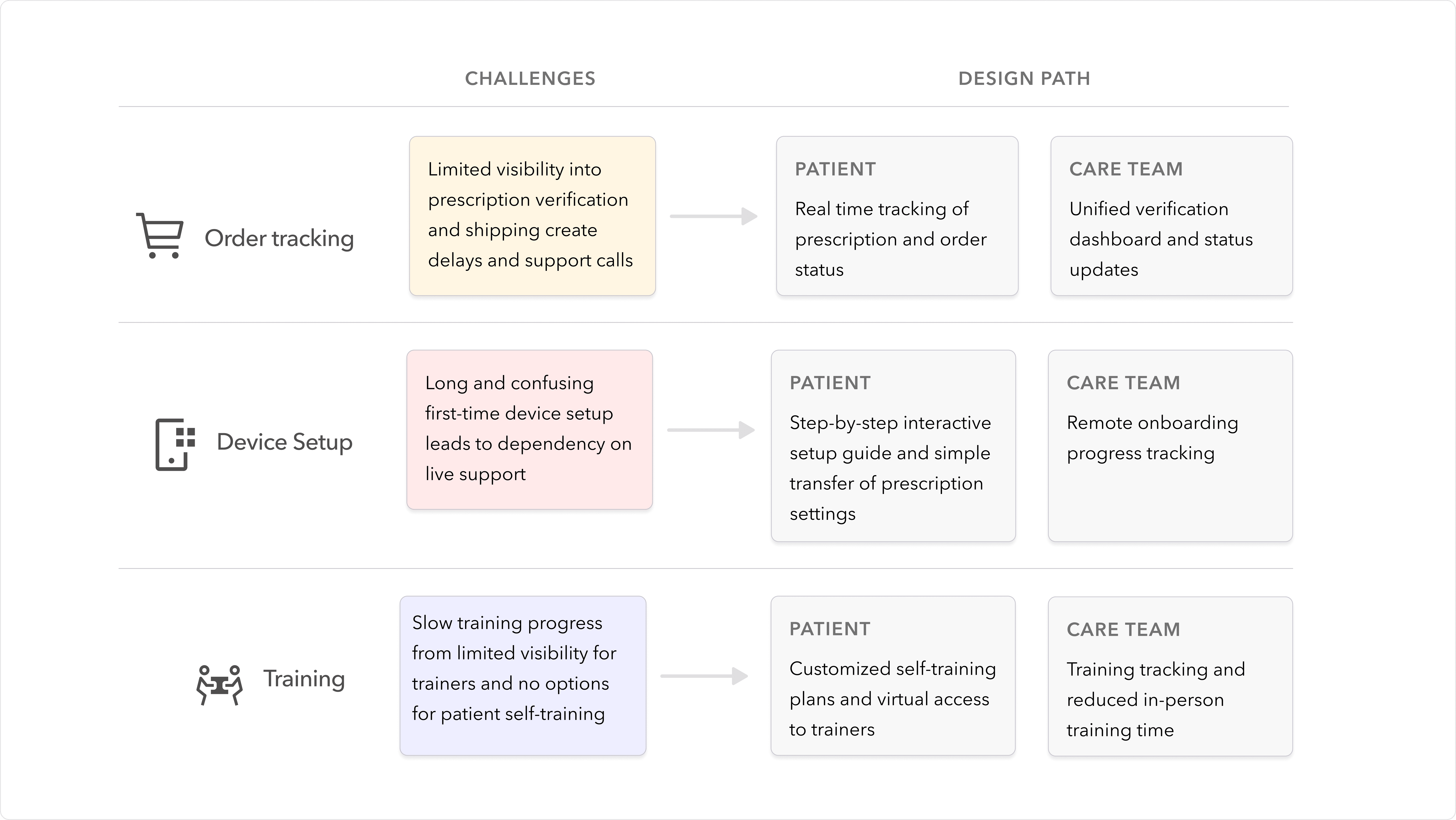
After leaving the doctor’s office, patients often waited days or weeks before they could begin therapy with their new device. Order status visibility was inconsistent. Shipments arrived in multiple packages without clear communication. Setup was confusing and time-consuming. Training took weeks. Care teams (clinicians, trainers, and sales reps) were working from separate tools. There was no shared, reliable view of progress.
We identified three primary friction points across the activation lifecycle: order tracking, first-time device setup, and training visibility.
Design Process
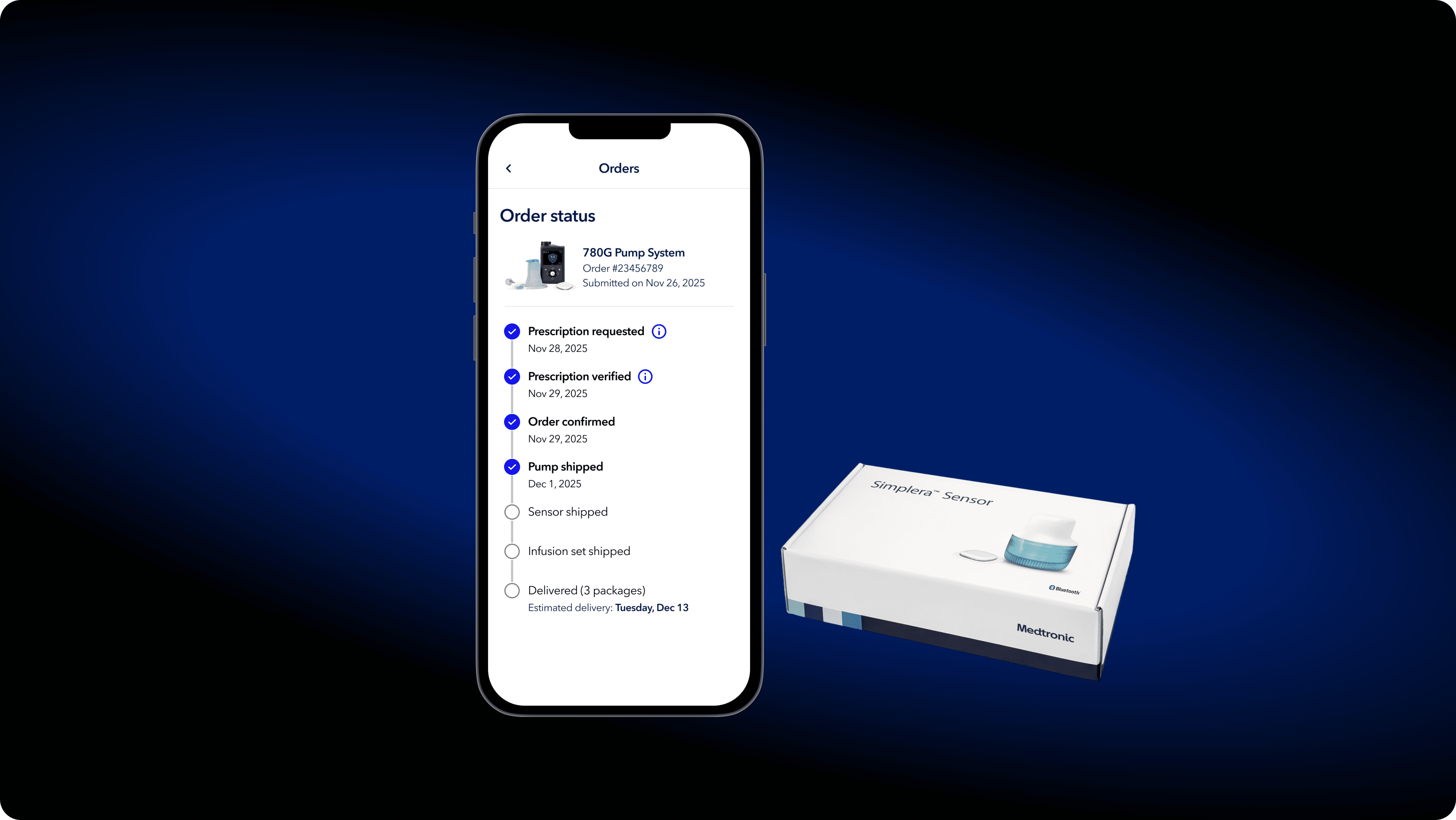
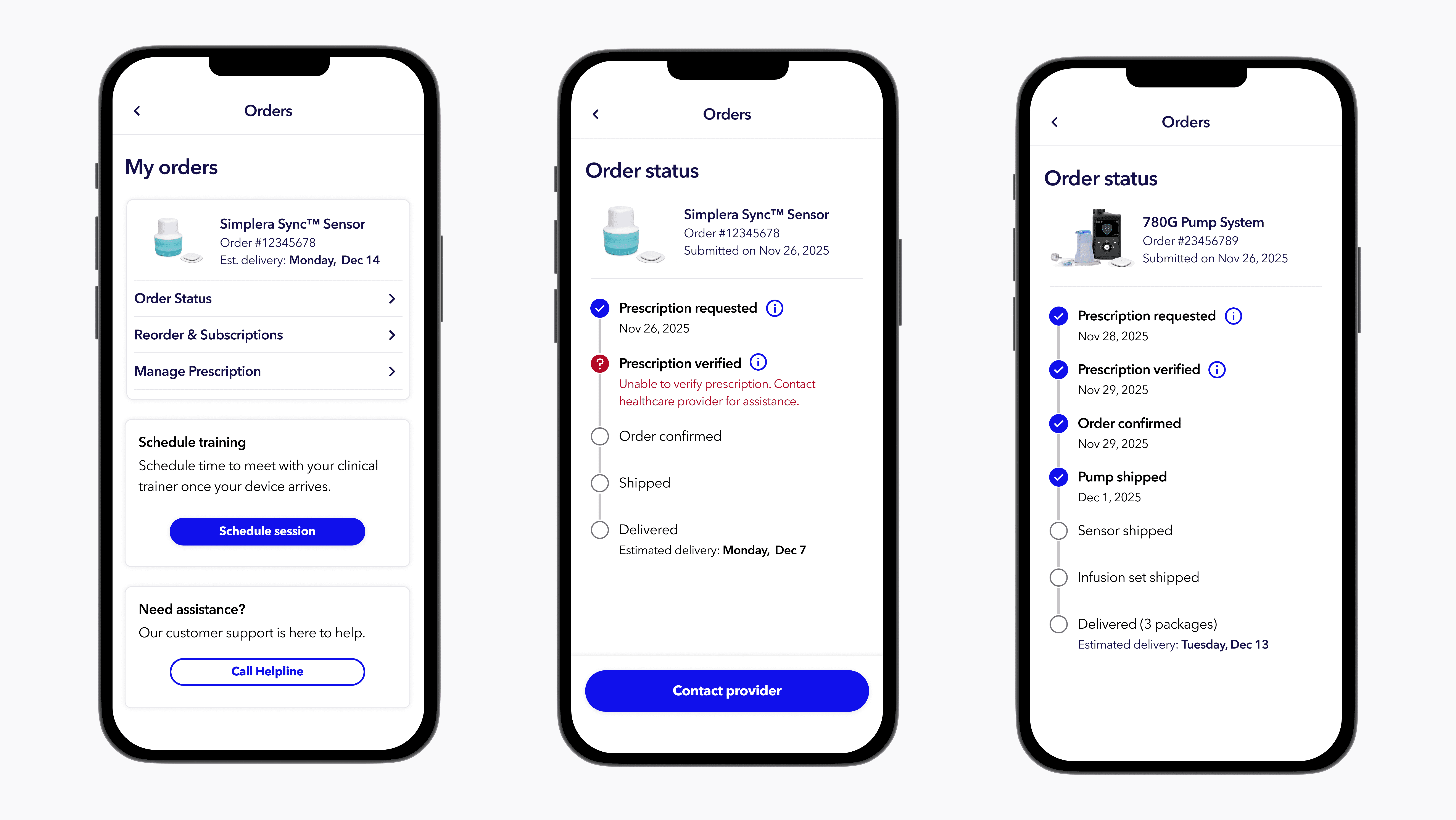
We designed an order tracker to provide transparency and actionable steps during uncertain waits.
During early discovery, I listened to customer helpline calls to understand what they were struggling with. Patients who needed their insulin pumps or missing accessories didn't know how much longer they could go without treatment. On the other side, customer support, sales reps, and providers had to play "telephone" after hunting for status updates.
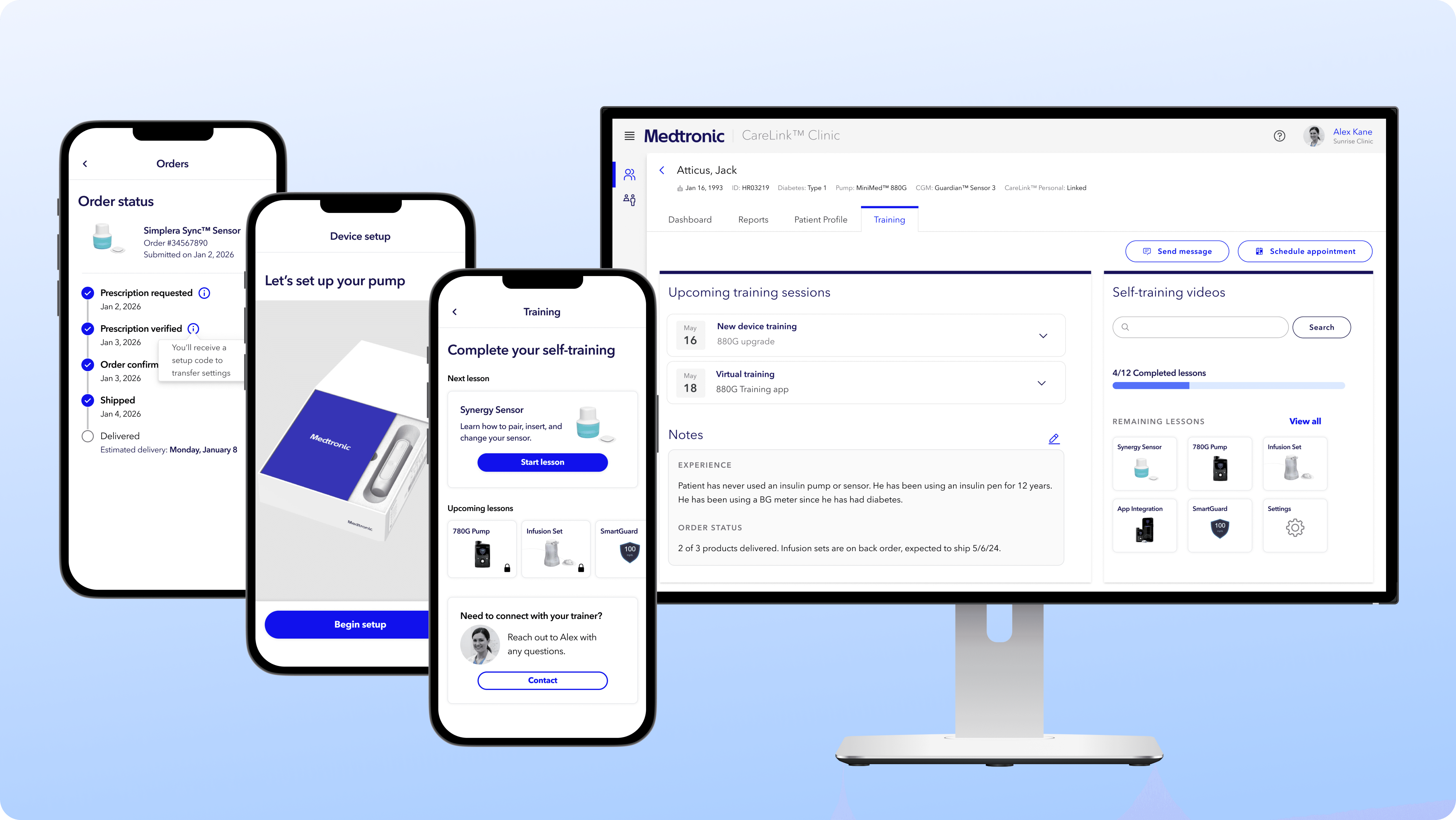
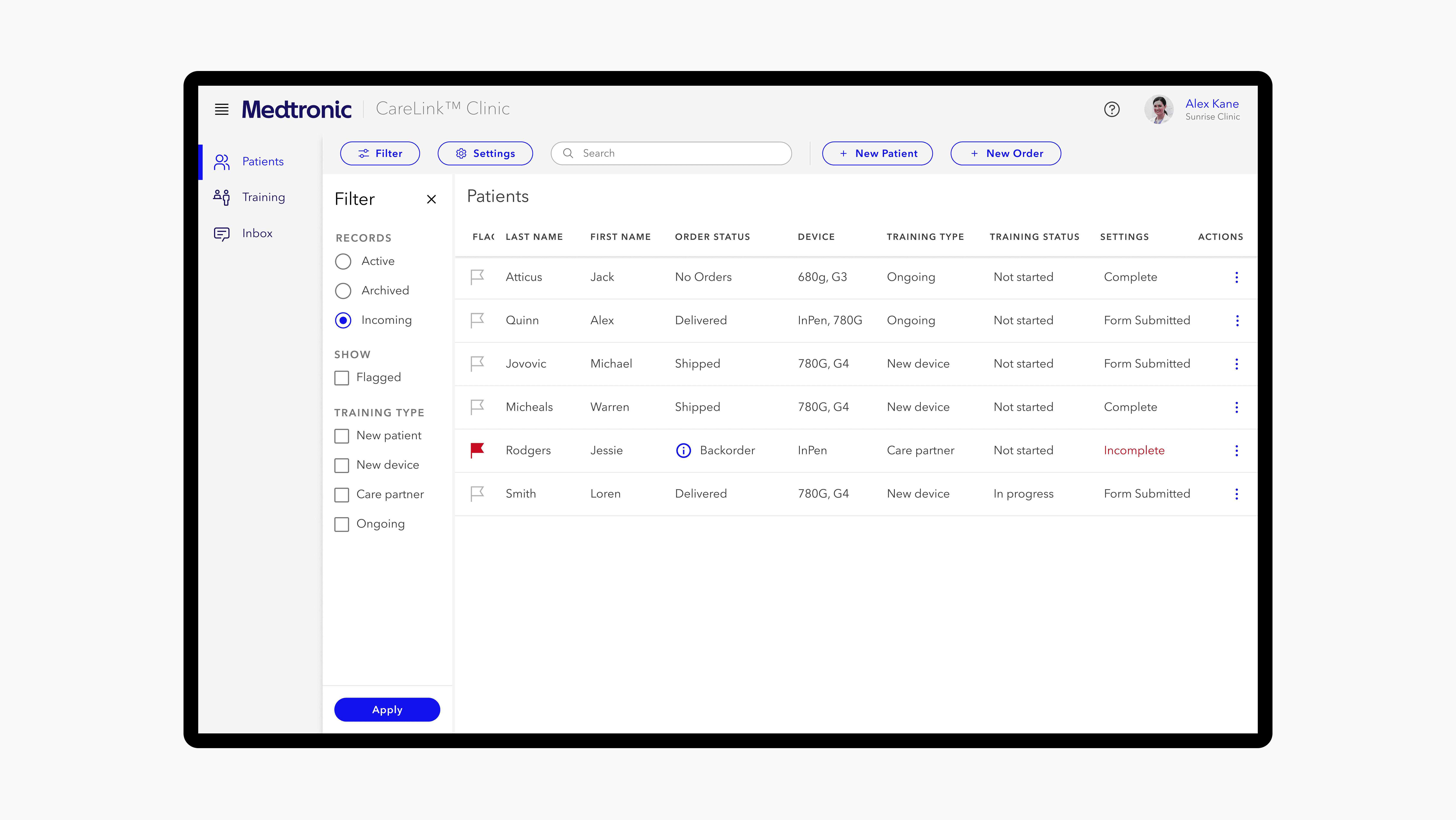
Previously, order information lived across external pages and disconnected tools. We redesigned the experience as a unified lifecycle with a mobile view for patients and a care team dashboard for clinicians.
Order tracking for patients
Care team dashboard for clinicians
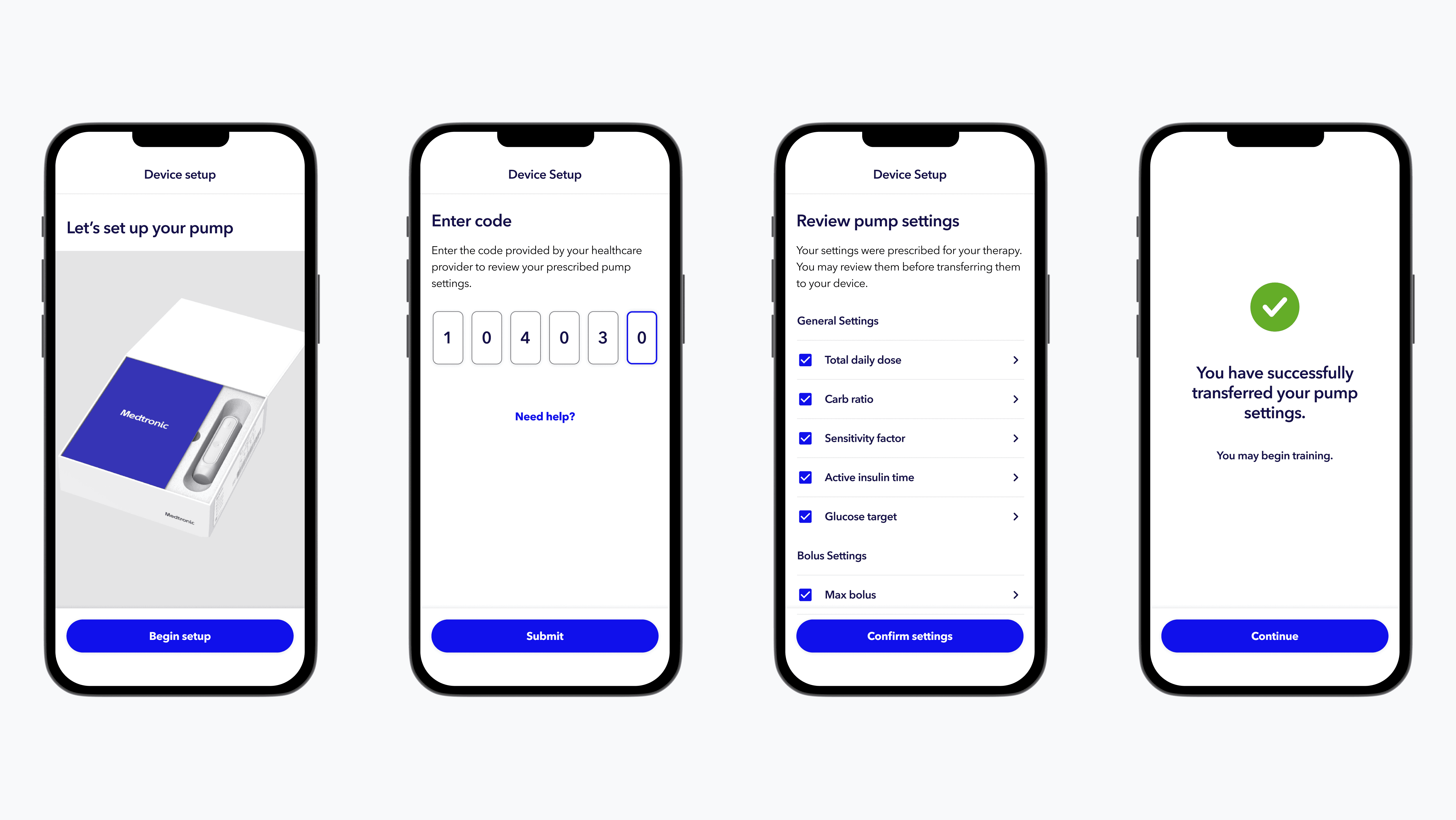
We transformed first-time setup into a safe, interactive, guided experience.
Once the pump arrived, patients faced a new challenge: configuring therapy settings that affect their daily health. In the past, this often meant manual entry from handwritten forms or waiting on a clinician to input values into the app.
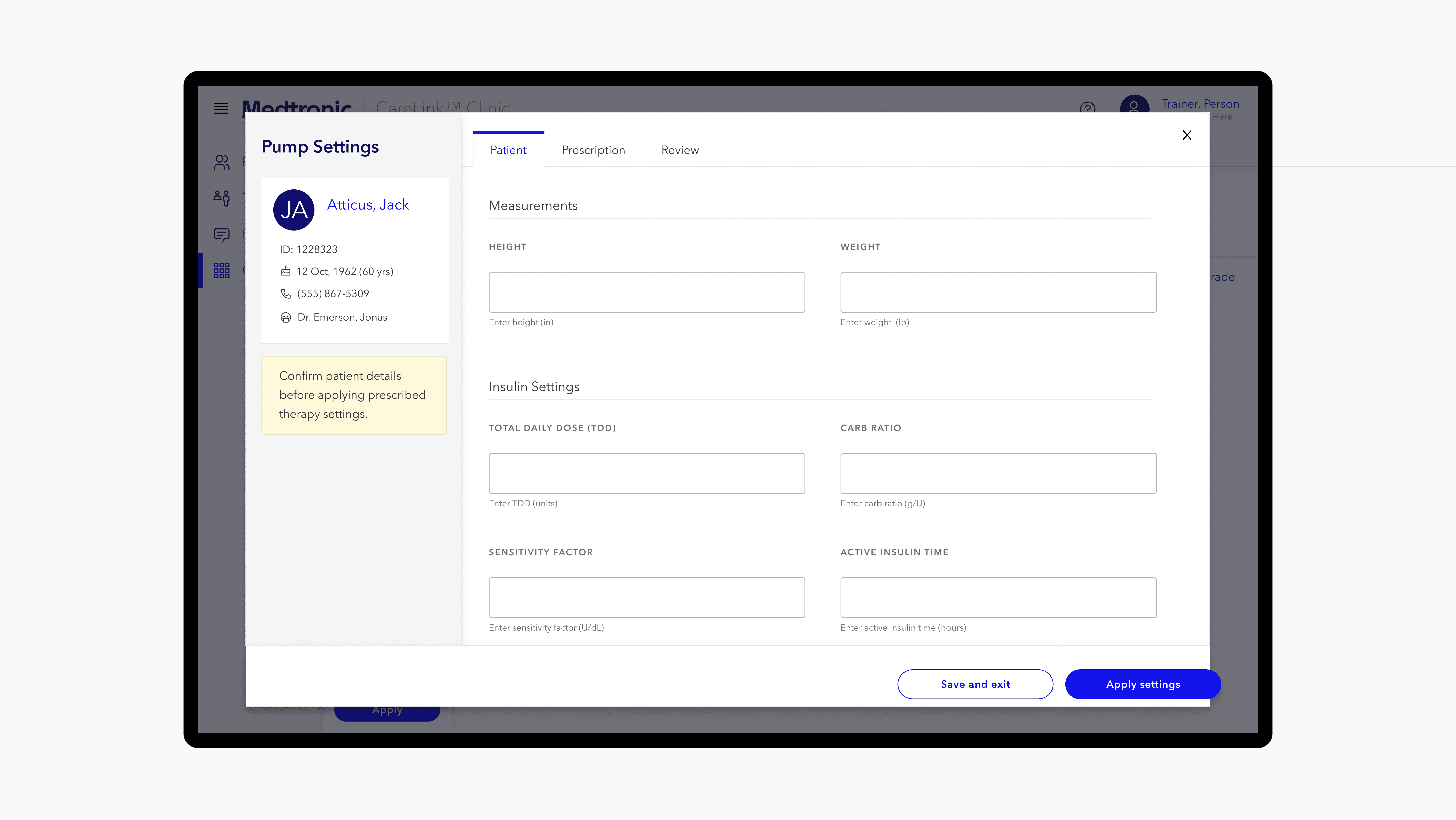
We created a streamlined flow where clinicians enter prescribed settings in the platform, and patients securely receive them in-app through a simple, step-by-step review.
This reduced setup time while preserving clinical accuracy.
Prescription settings entered by clinician
Patient setup with quick transfer of settings
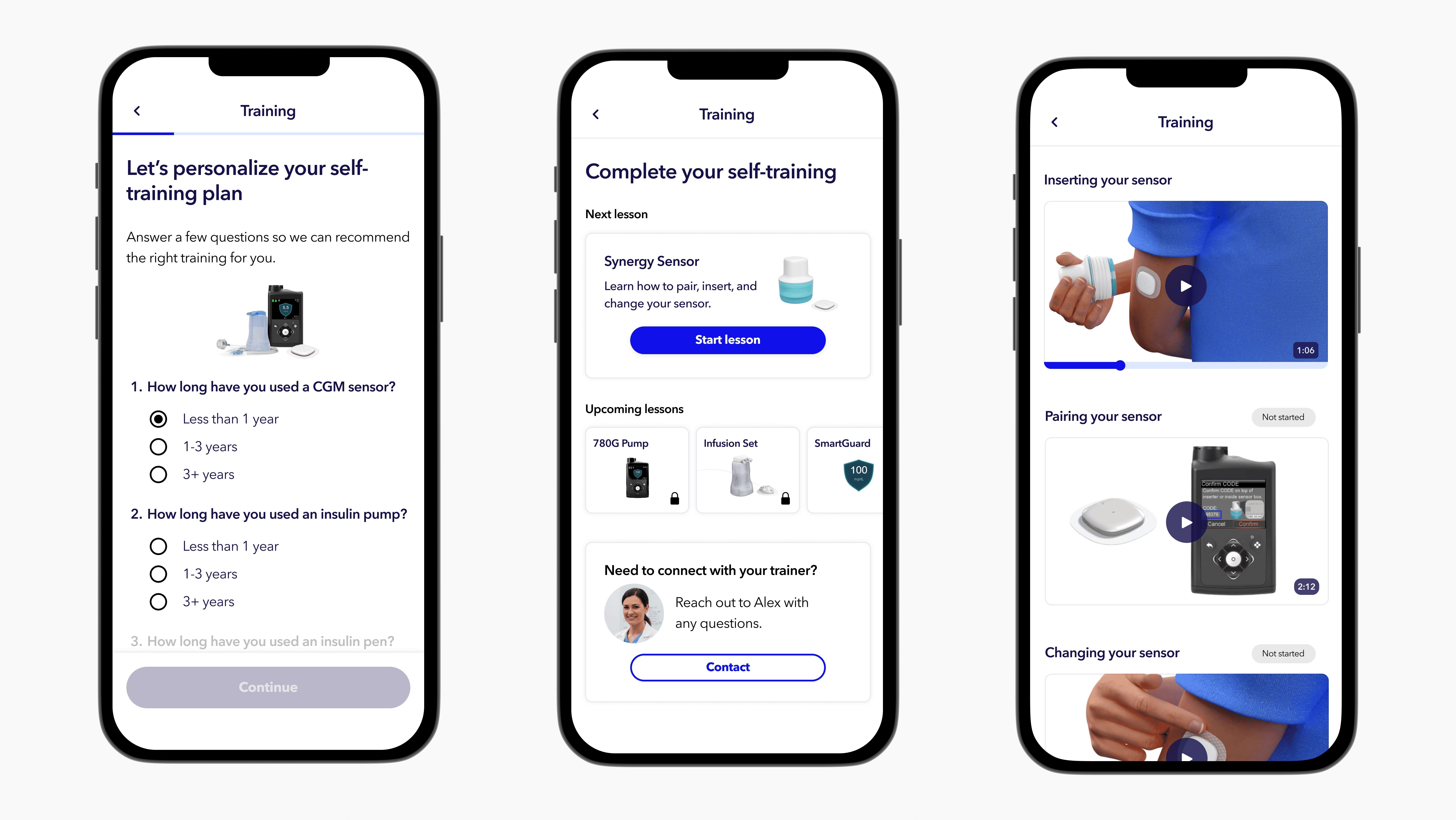
We provided tools to make training to feel quicker and more manageable.
Previously, patients were required to attend in-person sessions before safely beginning therapy. This created scheduling delays and added strain on both clinicians and patients.
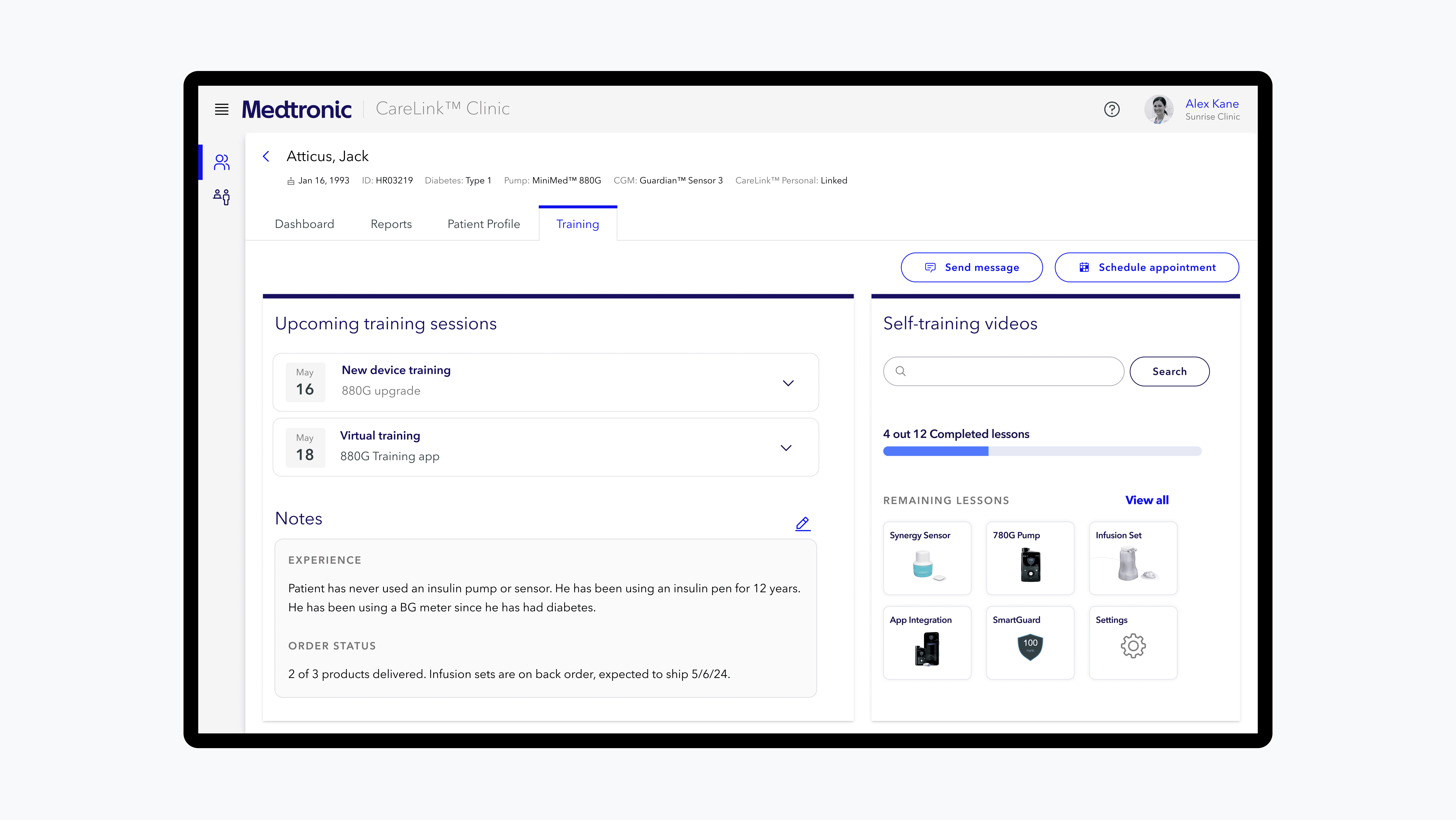
We introduced a blended training model: guided self-training paired with clinician visibility and optional support. Through the mobile app, patients can move at their own pace with a personalized plan and schedule appointments when needed. Through the care team dashboard, clinicians track progress in real time and step in when support is required.
Home self-training to accelerate patient education
Care team dashboard for tracking training progress
Outcomes
By connecting ordering, setup, and training into a unified activation lifecycle, we reduced friction for patients while improving operational efficiency across teams.
We presented the product to the marketing and executive leadership teams and highlighted the key impacts:
Operational cost savings for clinics and hospitals
Time savings for clinicians and support teams
Faster therapy initiation for patients leading to improved health
Fewer interruptions in clinical workflows
Reduced helpline call volume
Strategic Learnings
Get to know your customers and how they interact.
In multi-role systems, challenges shift between stakeholders from phase to phase.
Disconnected workflows create invisible risk.
Every extra step between systems increases cognitive load, coordination time, and the potential for error.
Shared language = operational alignment.
Mobile and desktop must share logic, not just branding.